Webinar recording – Strategic positioning: The art of getting noticed by the people who matter
In this article
About the webinar
“You don’t need to be big to stand out, just a bit different” The positioning concept in marketing is about how to achieve a clear distinction in the minds of your audience about what you offer. Done well, it becomes a sustainable advantage that makes you valuable to people in a way that others cannot easily copy.
A strong winning position means that when a customer needs what you offer, you are the only obvious choice. Whether you’re just starting out or deep into executing a plan, a fresh look at your positioning strategy can open up many possibilities. This allows for connecting with new and existing audiences in a deeper, meaningful, and fruitful way.
Watch this on-demand webinar, and learn ways to raise the value of your marketing, and how to balance artistic output with audience appeal. Guided by our Tech Champion for Digital Marketing and Strategy, Ollie Couling, this 60-minute webinar covers:
Why strategic positioning matters in marketing.
Steps you can take to define and articulate your winning position.
Case studies from across the creative and cultural sector.
Practical tools and resources you can take forward.
Guest speakers and case studies
This webinar features case studies that show repositioning in action; what was observed, what changed, and the impact it has had on connecting with audiences. Ollie was joined by key people involved in developing some of the strategies, including:
Zosia Poulter – Content strategist at Substrakt who worked with Trinity Laban to refresh their online brand identity.
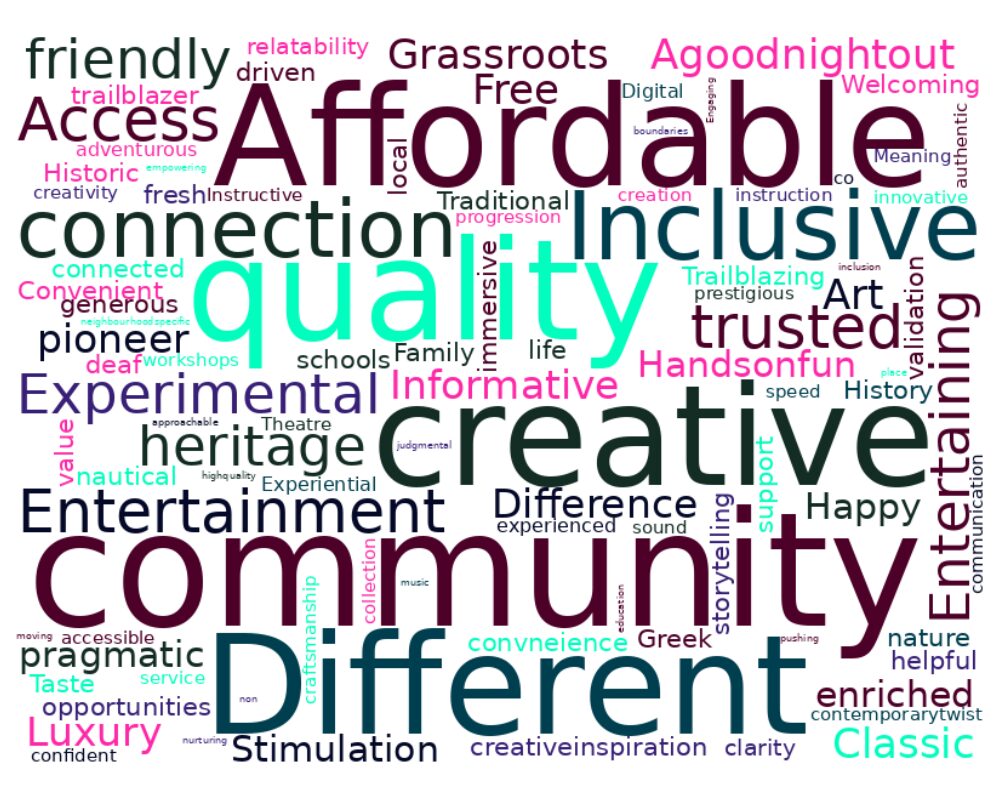
Below is a word cloud of audience responses to the prompt ‘What three words would describe the sweet spot between what your customers want, and what you do best?’:
Q&A
We invited the speakers to respond to some of your questions that we didn’t have time to cover during the live Q&A.
The Museum of English Rural Life’s Joe Vaughan
Is MERL’s audience primarily online or in-person?
It’s both – we balance online engagement with extensive in-person work that serves local people. There is often an overlap between these audiences: a parent who comes with their child can also be a listener to our podcast or a follower on Bluesky or Facebook. But they are often separate and we are mindful of this in our channel strategies. For example: the majority of our Bluesky audience are based in the US, which means we need to be careful in not using that channel to overpromote in-person events.
We struggle with growing audiences who are in-person vs our audiences online, and we are trying to grow outside of our current drivetime area. How do you balance targeting wider audiences while maintaining engagement with your local digital audience, who aren’t your current focus?
This is difficult to do organically, because you don’t get the option to specify the audience that receives any given post. This is the advantage presented by paid advertising (e.g. on Facebook and Instagram), where you can target specific areas and demographics with messages that are purposefully designed to engage and resonate with them. We are increasingly turning to paid ads for reaching local audiences because we find it’s very effective and has a very high return on investment.
MHM’s Debbie Spence
We are an organisation who provides a range of services for children (theatre, library, immersive experiences, after-school classes, artist development, and more). Should we use one positioning to cover all our children’s activities, or tailor messaging for each offer?
You only ever get one position in people’s minds. If you try to hold many, you’ll own none. So nail the single idea you want people to remember you for, then let your programmes and venues flex underneath it. Think Tate – one brand, many galleries – but one clear positioning that makes sense of them all.
As a touring company with limited visibility and resources, how can we grow audiences sustainably across regions where our presence varies? What’s your top tip for keeping positioning audience-focused rather than inward-looking?
It is tough when resources are so stretched. We’d recommend you avoid chasing geography and chase hearts and minds instead. Pick the audiences who already care about you and double down. Loyalty beats coverage every time. Keep your positioning as the fixed point: why you matter in people’s lives. Then flex the offer to fit each region. Map your strongest advocates and keep showing up for them. Build a simple data capture at each tour stop so you can re-contact and grow those relationships over time. That way you’re not spread thin, you’re building depth that lasts.
Substrakt’s Zosia Poulter
How did you keep existing users engaged while attracting new ones to the website?
Be clear who your users are (both existing and future potential) and find out what they need. For Trinity Laban, it was less about reinventing the wheel and targeting a completely new audience. The positioning exercise was about becoming focused and clear on the needs of different segments of the audience and distilling those core needs into more streamlined user journeys. User needs often crossover but they can also conflict so it’s important to have a collective understanding of your priorities. You can’t be everything to everyone.
We run an online conference and from previous year’s we’ve noticed a need to tap into certain regions more closely. What positioning strategies could help us build stronger regional networks, especially in areas like Northern England and Northern Ireland, for our online conference?
I’d start by looking at what the audience needs are in those areas and how they differ from your regular audience. The positioning formula Ollie shared in the session is a really useful framework for this exercise. What’s the market competition in those areas? And how can you best fulfil the needs of that regional audience in the context they are in? You may want to use the framework to firstly map out regional differences, before using it to identify your overall positioning.
Further support
The Digital Culture Network is here to support you and your organisation. Our Tech Champions can provide free one-to-one support to all creative and cultural organisations who are in receipt of, or eligible for, Arts Council England funding. If you need help or would like to chat with us about any of the advice we have covered above, please get in touch. Sign up for our newsletter below and follow us on X (Twitter) @ace_dcn and LinkedIn for the latest updates.
This article aims to provide compelling reasons why creative and cultural organisations and individuals should continue to put emphasis on their digital strategy so that they can adapt to change and drive better results.
Developing a robust digital strategy is essential for creative and cultural organisations to thrive when having to achieve a lot with limited resources. A digital strategy allows you to not only engage your audiences more effectively but helps to ensure that you are well positioned for growth and well prepared for change. Here’s how creative and cultural organisations can build a strategic plan that aligns with their values and vision, providing clear actions and outcomes to make meaningful change happen.
In this episode, James catches up with David Yard from Gulbenkian Arts Centre, one of our 2025 Digital Culture Network Award winners. David shares how the team are using digital tools and a clear strategy to strengthen local audience engagement and deliver meaningful results.